Sunday, September 29, 2013

The Identity Theories

Casey French
9/29/13
The Identity Theories



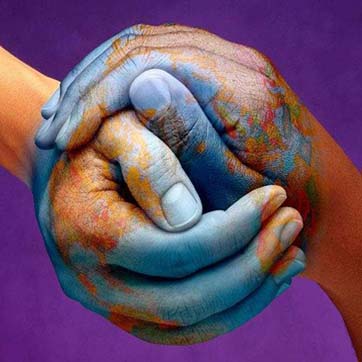
In class, we discussed the two theoretical approaches to global identity: identity theory and social identity theory. The identity theory is a straightforward approach to gathering information about a certain culture, primarily based on ascribed traits. It does incorporate other areas that are achieved traits, but this theory is based on characteristics of the individual. It aims to survey a multitude of participants with a list of questions. As mentioned in class, the survey handout is an example of this theory because it is a list of characteristics that one identifies themselves with such as race, class, gender, occupation, and religion. That is the primary focus. It assesses the attributes of an individual in a culture by only looking at the surface of one's identity. This is a simplistic approach to gathering useful information in a quick and timely matter. The other theory is more complicated and allows for more variance. Social identity basically classifies people into what they perceive to be their sense of belonging in a group. It is the localized groupings that give people a sense of social identity. This includes social class, religion, and family, but it can even incorporate one's interests that set them apart from other groups. It could be as transparent as identifying yourself with a specific soccer team or associating yourself with a specific political party. That is a pretty generalized statement, but the point I'm trying to illustrate is that social identity is a subcategory of global identity that people claim membership to and links commonalities in their values or norms. It's one's self-concept and shared values that more specifically distinguish themselves from their global identity.


I found this video that illustrates my point. Sami Awad explains how important it is to have a global identity, stating that life would be boring without different identities. Awad analyzes the structure of global identity, explaining how people are associating themselves with smaller, localized groups before they identify themselves as their nationality. He shows that there could be multiple identities before someone finally reaches that national level. Instead of identifying one's self as their nationality, people have to prioritize the identity that holds the most importance to them. He gave examples of "sublevels" of global identity such as ethnic identity, religious identity, cultural identity, etc.

"It is not an issue of balancing one [identity] over another, but creating this transformation between these two aspects are building and creating something new."

I agree with his interpretations on social identity. It is not always about nationality. It is about the small communities that we interact with every day that makes us different. We are all similar by being human in a sense, but our cultural differences makes us unique and it should be respected and interpreted with an open-mind. 

Sunday, September 22, 2013

Ethnocentrism and Cultural Relativism

9/21/13

Ethnocentrism and Cultural Relativism


This week we discussed the difference between ethnocentrism and cultural relativism. Ethnocentrism is the tendency to view the world through the perspective of one's own culture. There are positive and negative connotations with ethnocentrism. It creates higher unity and nationalism, but it also creates bias and inferiority of other cultures. When referring to ethnocentrism, it basically involves one group of people making judgments toward another. This leads to the belief that one's own race or ethnic group is superior and the language, behavior, customs, and religion of a particular group is subordinate. By using this methodology to try and understand culture, the study is already biased. It's natural to try and comprehend the customs of different people around the world through our own ideologies. The thought of having a clean slate and simply experiencing things for the first time is impossible. We already established a foundation in our minds that can not be altered. That foundation will always try to interpret what one experiences based on their own culture. Ethnocentrism is important to have because it gives people self-identity and pride in one's origins. However, ethnocentrism should be handled with care since a bloated sense of nationalism only provides arrogant viewpoints. There are methods of reducing ethnocentrism in order to provide unbiased and accurate research.

Cultural relativism, on the other hand, simply means that it is impossible to translate the values and concepts of one's culture is the belief, but should be treated respectfully and with an open mind. Branching from the idea that nobody comes comes a neutral position, the best way to interpret other cultures is acknowledgement. Ignorance is an extreme of ethnocentrism. Everyone conducting research should have the mindset that they are not neutral and by acknowledging that fact, research can by more focused on the norms of a certain culture rather than the ideals of their own society. Some professional researchers have difficulty brushing away their own opinions out of their studies. Doing this will make you more aware of your surroundings and allows you to conduct conclusions equitably.


I used this video because it provides examples of both ethnocentrism and cultural relativism. It provides greater support to my explanations of the two terms. The key idea here is that it is alright to compare two cultures, but it is unacceptable to think that one is superior than the other. Society can not be understood by watching the news or reading articles, for they only touch the surface. There is more to people than what meets the eye and the only way to understand is to experience it yourself. Culture is wonderful and it's our differences that makes life interesting. 

Sunday, September 15, 2013

The Complexity of Global Sociology

9/15/13


The idea of having a universal understanding of sociology among nations of the world is quite an obstacle. The two publications we read do not clearly state a solution to the problem. Both Burawoy and Moore simply address the concept of global sociology. I personally found Burawoy's reading to be more straightforward and honestly, more bearable to read. I was interested in what he had to say in regards to other countries. I found that his thought on having a common practice of sociology through collaborative and collective studies all around the world based on global issues was more respectable than Moore's concept of global sociology dated 47 years ago. Moore simply envisions the thought of having a global sociology (which is his article seemed to only involve the U.S. and Europe) and states that there are large gaps that needs to be bridged to become a subdivision of sociology. Burawoy actually addresses the problems that restrict the unity of sociological works and explains the complexity of understanding its components. Language dominance (English) as well as socioeconomic factors are examples of these limiting components. Sociologists in some countries have to become involved in an international organization, because in their country, sociology is not valued as highly as other nations around the world. I thought Burawoy was more organized structurally in his study than Moore, who seemed to drift off on incomprehensible tangents that I had difficulty following.

I found this video summarizing the challenges of global sociology.


This video is very relevant to our class discussion. This video, uploaded by the ISA, gives you multiple factors hindering the addition of global sociology: linguistic domination, resource asymmetry, privatization of research, and alternative theories. Notice that the majority of the whole video is in English. That alone shows the problem with global sociology. There is a constant push to write scholarly journals in English. At the 3:00 mark, many sociologists argue that there is not an equal opportunity for some countries. He says that no government or institution or university would support you in the way other nations would and that the best opportunity would be apart of an external source. What's that external source? An international organization. The struggles of some countries are so overbearing that participation is drastically diminished as explained  at the 7:08 mark. For those that do continue and work for an international organization privatize their ideas for the benefit of that organization, not a contribution to the knowledge bank of the world. This video revealed the true inequality of sociology. There are still many internal and external components that interfere with progress.

Also, I found the "Story of a Shoe" exercise very informative and entertaining. I shared part of my paper on Nike in class, but I knew beforehand the allegations against them as a company. The studies and journals online were infinite due to their negative publicity. It was nice to hear that companies like TOMS focus less on profitability and more on the well-being of their employees abroad. It was very engaging class this week!

 
Powered by Blogger.