Tuesday, November 26, 2013

Anatomy of Social Movements

Casey French


This week, we talked about social change and the attempt of constructing a universal list of human rights that applies to all humans. In the case of social change, we discussed collective behavior and resource mobilization. Collective behavior is based on emotions and often sporadic and unorganized. Resource mobilization is a devised agenda to carry out protests effectively. In class, I revisited Anonymous and how this "floating" organization might be categorized. On one hand, they base their efforts in response to a particular event. Their actions are more cause and effect, acting on collective behavior. I feel that their initial reaction is an emotional outburst in the primary stages, but Anonymous is unique. Through technology, I feel that their strategy is also resource mobilization with a planned action within the core of their activism. Whether they want to make one person or group miserable or mobilize the masses, the amount of change is varied. I like the idea of organizations like Anonymous and Green Peace for cleverly disassociating themselves from governments. Their entity is entirely of their own creation with members of different nationalities, but with no affiliation with any nationalities. It's the individual that they focus on, focusing on their cause and how to protect the environment collectively.


Recently, there has been many efforts to protest arctic drilling in Russia by Greenpeace activists. This is a humorous attempt at getting their point across. I attached the article underneath the video for those who want to read more!


Thursday, November 21, 2013

Consequences of Development

Casey French

'Good Fortune' was an interesting film that gave us a different prospective on large-scale development projects in impoverished areas. According to the Kenyans, worldwide organizations are ultimately doing more harm than good. They explain how the government is receiving foreign aid for development and distributing it into other sectors other than its original intention. It shows how corrupt the government is and how policy dictates the people, serving as the decision-maker of economic distribution. Foreign aid is meant to help the well-being of those living in "poor" conditions. Other than through monetary funding, many are imposing concepts of agriculture in order to prevent hunger. I believe this is a form of cultural imperialism by imposing western ideologies and deeming it acceptable to relocate an entire population against their will. Another example is the influence and pressure from many foreign organizations who want to implement strategies to better the standard of living based on their own ideology. 


I thought this documentary also brought the idea of what it means to be "poor". What is poor in reference to? Compared to the United States/Europe? I remember one of the residents claiming that he was not poor. He will be poor once they evict him from his house. I thought this was interesting, because it shows that they are happy with their current lifestyle. Look at us. Is poor defined by our personal commodities? This is a debatable topic and I'm curious to see the breakdown of this concept in Monday's lecture.

Friday, November 15, 2013

Demographic Theories

Casey French

Population demographic theories are a fascinating area of study. In class, we discussed about population and migration and its effects on the nation-states. The two theories associated with demographic trends are the demographic transition theory and the Malthusian theory. The demographic transition theory links population trends with technological advancement while the Malthusian theory correlates population with a resource-based production. I associate more toward the Malthusian theory. I believe humans, like animals, have a carrying capacity in which resources become limited and as the world's population reaches a specific point, there will be an immediate decline of the population. This can be disastrous and scary to think about it. Warfare and famine could result from this strain of resources. The nation-state is impacted dramatically from this increase. They are responsible for immigration control and those countries with high birth rates disperse through borders in search of better opportunities. In a natural resource class I enrolled in last year, we tried simulated a scenario with moose populations in an environment with an abundance of plant species and limited predation. The results were eye-opening. The amount of resources consumed was not regenerating at a rate to sustain the growing population. The population collapsed, directly influencing the wolf population as well. In a way, we are the moose. We are over-consuming and manipulating our environment. We have no predators other than ourselves. That is why I feel this theory is more realistic. 


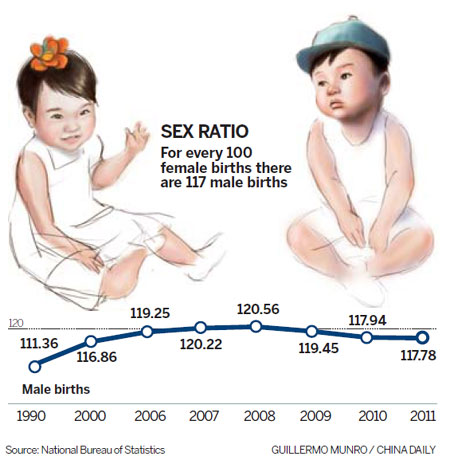
China implemented the one-child policy to combat its rising population. A nation-state is actually forcing people to have a small family structure. This is interesting, because our natural tendency to have the choice of how many children we want is now mandated by a country. This causes problems and as the video demonstrates, the government is shrinking the base that support the elderly in an attempt to limit the population. The favoritism for male children also shifts the gender pyramid, making it more difficult for men to find marriage partners. In 2006, China peaked at 120 males for every 100 females. This statistic alone indicates how favoritism could pose a problem in the future.


Saturday, November 9, 2013

Religion in Iran

Casey French

This week we discussed religion and how some societies are becoming more secularized due to globalization. The common perception was with an increase in modernization, secularization will directly correlate and eventually will be replaced by science. However, that is not the case. In fact, religion has an important role in national identity, providing people with a sense of purpose, social interaction, and charitable contributions to the community. In Iran, religious tolerance is non-existent, dominated by the Shai Islam religion. In an attempt to preserve the religious authority of the government, any opposition to reform the political or religious system in Iran is considered treason, leading to the suppression of many human rights.


Iran has recently banned a popular newspaper called the Bahar earlier this week on the basis of criticizing the foundation of Shai Islam according to Aljazeera News. The controversy began when Bahar published a news article questioning the legitimacy of the Prophet Muhammad’s successor. Bahar challenged the idea that Muhammad never appointed a successor, infuriating many Shai Muslims. According to the CIA, Shai Muslims account for 89% of the total population of Iran. Some experts say the intention of this article was to spark religious conflict within the country. This is not an uncommon occurrence in Iran. According to Aljazeera, there have been over 120 reformation newspapers banned since 2000 with many of its writers imprisoned. During this time, the newly elected president Hasan Rouhani vowed for more tolerance towards speech and social media according to Associated Press. His proclamation for change in Iran has already granted 23 jailed writers their freedom. In a recent report, as many as 70 journalists were imprisoned for “spreading propaganda against the state” and every month, 1,500 anti-religious websites were shut down by the government. By lifting the restrictions on speech, the people of Iran can express issues more openly.


It will be interesting to see how the newly elected president will deal with future reformists. He is very liberal compared to his predecessors. Iran is a great example of how the nation-state tries to hold their roots conservatively and how religion is used as legitimizing political decisions.


Saturday, November 2, 2013

Anonymous: Activists or Terrorists?

Casey French


Beginning with internet pranks, Anonymous is a loosely connected group of internet activists that fight for freedom of speech and expression through technology. Their mischief has caused many disruptions in governmental organizations to fight corruption. Advancements in technology has changed the way we see the world, especially the way we communicate and collaborate. But what is their basis? What is the fine line between social good and terrorism? It is difficult to say. I understand how taking down Hal Turner and the Church of Scientology can be entertaining. I realize their impartial motives in certain situations that are immoral or inhumane. However, I am still skeptical. On one hand, they have no hierarchical system in which corruption can exist. This allows them to stand true to their motives and fight the political groups that are tempted by greed and dishonesty. The release of classified government documents exposes the political systems of every country for what they are in the past and the present. It's information that the public wants. On the other hand, hacking websites that compromises corporations do not affect just the source of corruption. It trickles down the hierarchical pyramid, harming many other innocent people. Anonymous has presented valuable information to the public, but it could be dangerous in the wrong hands. It weakens the structure of government, which is their goal...transparency between borders. When a group of people fight for revenge, their cause could be less meaningful and more categorized as terrorism. It's difficult to create change for good when the masses feel insecurity and fear. Since Anonymous is a loose organization, I feel it can escalate and branch off into more terrorist groups. Not everyone has the same ideology and when they're behind a computer screen, it's easy to show your true colors without anyone knowing your identity. 


This is a brief example that was explained in the documentary. It's alarming that the personal credit information of over 3 million people has been lost by a trusted corporation to people with no identity. Their motive inflicted substantial losses to Sony, and their mission was clear. However, what about those 3 million people whose valuable information has been stolen? This act is eye-opening and shows the true power of the internet. So what do you guys believe? Is Anonymous a group that uses malicious acts to achieve change or a group with the common good to rally for justice to those who are oppressed? 
 
Powered by Blogger.